
G.K. Chesterton's "Orthodoxy" Slow Read
Final Meeting: May 23


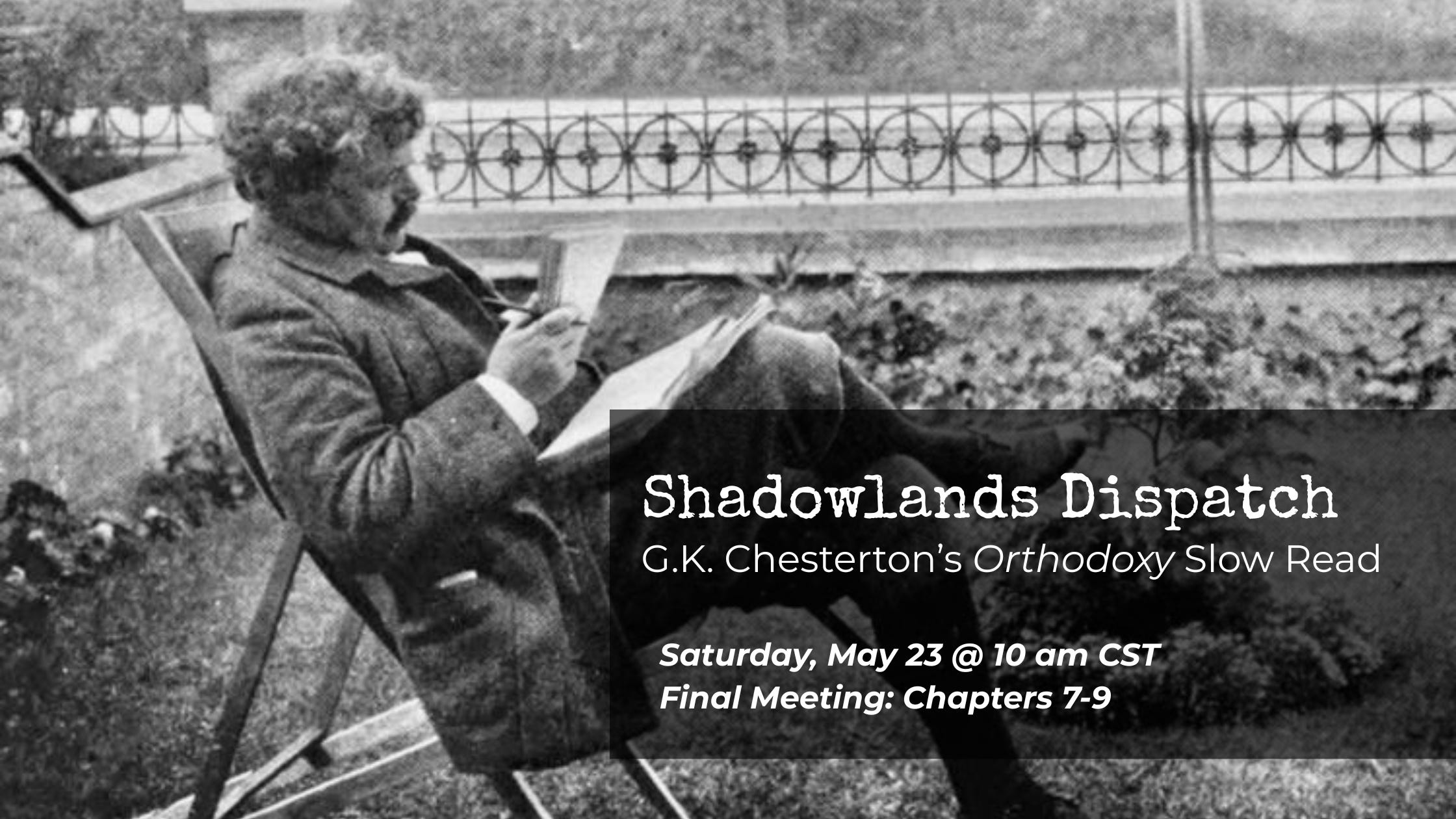
Our final meeting of the Orthodoxy Slow Read will be this coming Saturday, May 23 @ 10am CST.
This has been such a delightful journey. I don’t know about you, but this masterpiece has always been balm for my soul, and reading it with a group of thoughtful readers and deep thinkers is an opportunity for which I have longed over many years. I know I have gained more from this reading because of the excellent company.
Note: I will send the Zoom link via Chat before the meeting.
Here’s a little taste of what we have in store for the final leg of the journey—a little teaser quote from each chapter. See you Saturday!
Chapter 7: “The Eternal Revolution”
“To the orthodox there must always be a case for revolution; for in the hearts of men God has been put under the feet of Satan. In the upper world hell once rebelled against heaven. But in this world heaven is rebelling against hell. For the orthodox there can always be a revolution; for a revolution is a restoration. At any instant you may strike a blow for the perfection which no man has seen since Adam.”
Chapter 8: “The Romance of Orthodoxy”
“All Christianity concentrates on the man at the cross-roads. The vast and shallow philosophies, the huge syntheses of humbug, all talk about ages and evolution and ultimate developments. The true philosophy is concerned with the instant. Will a man take this road or that?—that is the only thing to think about, if you enjoy thinking. The aeons are easy enough to think about, any one can think about them. The instant is really awful: and it is because our religion has intensely felt the instant, that it has in literature dealt much with battle and in theology dealt much with hell. It is full of DANGER, like a boy’s book: it is at an immortal crisis.”
Chapter 9: “Authority and the Adventurer”
“And as I close this chaotic volume I open again the strange small book from which all Christianity came; and I am again haunted by a kind of confirmation. The tremendous figure which fills the Gospels towers in this respect, as in every other, above all the thinkers who ever thought themselves tall. His pathos was natural, almost casual. The Stoics, ancient and modern, were proud of concealing their tears. He never concealed His tears; He showed them plainly on His open face at any daily sight, such as the far sight of His native city. Yet He concealed something. Solemn supermen and imperial diplomatists are proud of restraining their anger. He never restrained His anger. He flung furniture down the front steps of the Temple, and asked men how they expected to escape the damnation of Hell. Yet He restrained something ...”